
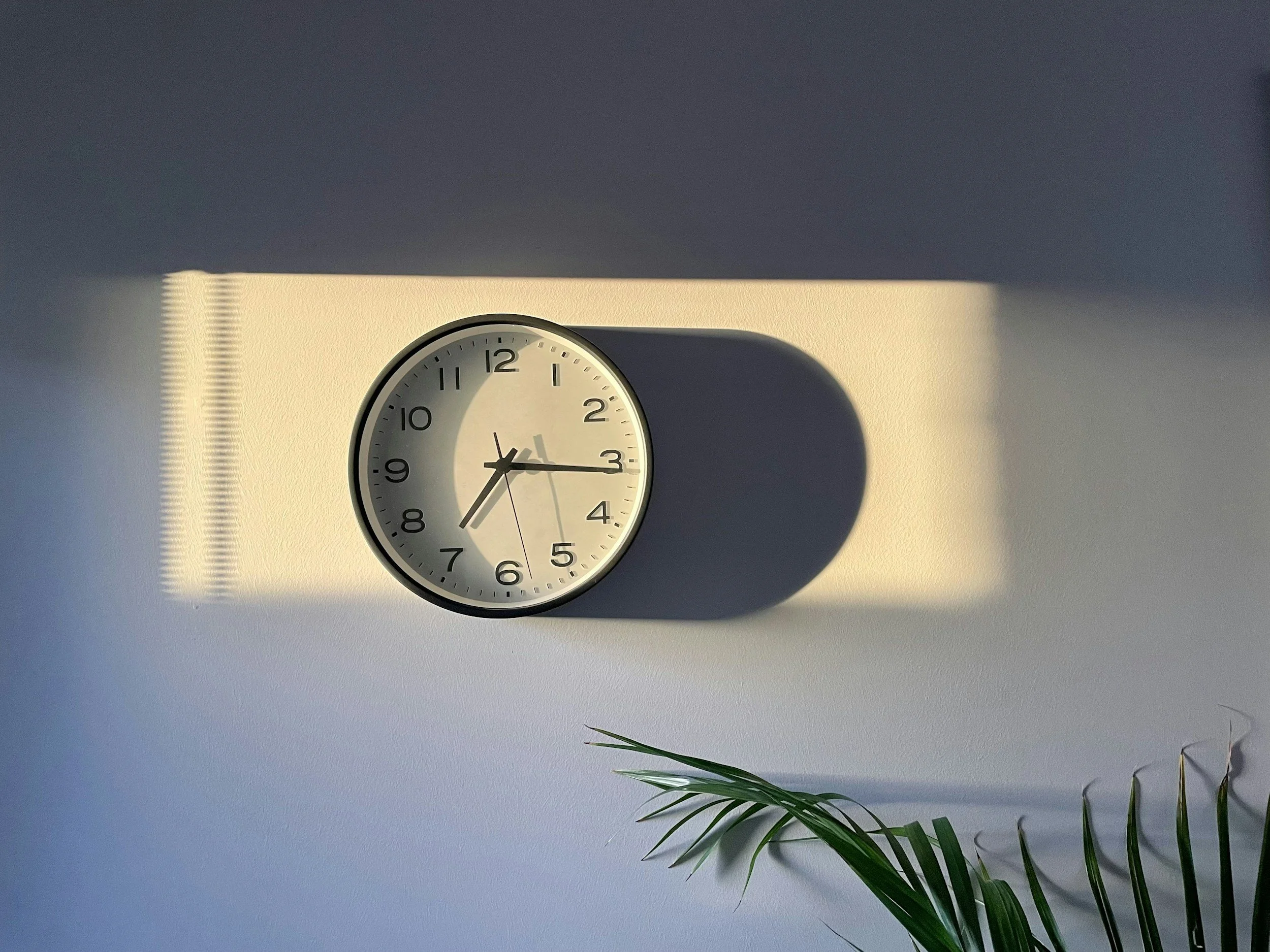
Twice a year, most of us “spring forward” or “fall back” as daylight savings time begins or ends. While the clock only shifts by an hour, that small change can have a surprisingly big effect on sleep, mood, and energy levels. If you’ve ever felt sluggish or irritable after the time change, you’re not imagining it. Your circadian rhythm, or your body’s internal clock, has to work to recalibrate.
In this post, we’ll explore how time changes disrupt your natural sleep-wake cycle and practical ways to adjust smoothly this season.
What Happens to Your Circadian Rhythm When the Clock Changes
Your circadian (circa = about; diem = a day) rhythm is a roughly 24-hour cycle that regulates when you feel alert or sleepy, and light is the most potent signal for setting and regulating your circadian rhythm. Getting light exposure consistently each morning tells the brain to send alerting signals around the same time each morning and quiet down these signals around the same time each night, allowing for a predictable sleep window. When your schedule suddenly shifts by even one hour, it’s similar to mild jet lag. After the time change, morning light arrives earlier or later than usual, throwing off the signals that help you feel awake in the day and sleepy at night.
This mismatch can lead to:
Trouble falling asleep or waking up
Fatigue and difficulty concentrating during the day
Changes in appetite or mood
People who already struggle with insomnia or circadian rhythm misalignment (e.g., night owls who already tend to be out of sync with societal norms) often feel the effects of time changes more acutely.
How to Help Your Body Adjust Smoothly
Fortunately, there are ways to help your circadian rhythm catch up to the new schedule.
1. Adjust Your Schedule Gradually
Shift your bedtime and wake-up time by 10–15 minutes per day in the week leading up to the time change. This allows your internal clock to adapt gradually.
2. Prioritize Morning Light
Get outside within the first hour of waking. Natural sunlight is the strongest cue for resetting your circadian rhythm. Even 15–20 minutes of exposure helps suppress melatonin (the hormone signaling time to sleep) and boost alertness.
3. Dim Lights in the Evening
Lower indoor lighting and reduce screen time, especially on hand-held devices close to the eyes, at least an hour before bed. Blue light delays melatonin production and can make it harder to fall asleep.
4. Keep Your Sleep Environment Consistent
Maintain a steady bedtime routine and sleep environment — dark, cool, and quiet. Consistency tells your body it’s time to wind down.
If You’re Struggling Beyond a Few Days
Most people adjust to the time change within a week, but if sleep disruption lingers or worsens over time, it may be time to seek additional support. Cognitive Behavioral Therapy for Insomnia (CBT-I) is an evidence-based treatment that can help retrain your sleep-wake cycle and improve sleep quality without medication. As a CBT-I therapist in San Diego, I specialize in helping clients restore balance to their sleep systems and feel more rested and alert throughout the day. If you notice that time changes, jet lag, or irregular schedules throw your sleep off for weeks at a time, reach out to learn more about how CBT-I can help you realign your circadian rhythm and get consistent, restorative rest.
